
Minerva Teichert
(1888 - 1976)
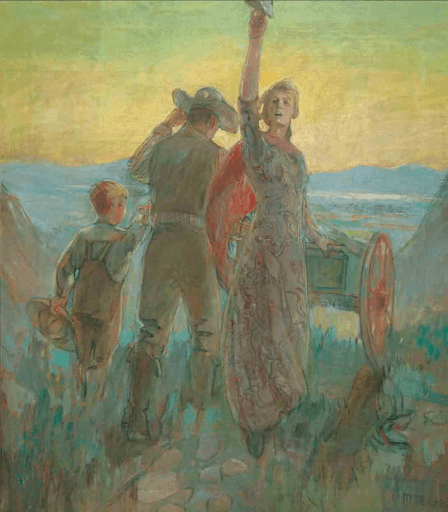
Handcart Pioneers
Oil on canvas, 1937
Minerva Teichert was a 20th-century American painter known for her art of Western and Mormon subjects. A staple in many LDS buildings, the law school contains notable works from Teichert. Handcart Pioneers portrays the journey of LDS pioneers as they catch a glimpse of the Salt Lake Valley after arduous travels.
About
Referencing this painting, J. Reuben Clark poetically suggests meaning it can bring to our lives:
What of us? Can we keep and preserve what they wrought?
When we see what God hath wrought through them [of the last wagon]; when we count our blessings; when we see our children in peace and plenty and happiness; when we ponder upon our rights, our liberties, our free institutions; when we perceive the threats against all this rising on all sides, when we see the wolves, lean and hungry, standing at the gate of the sheepfold, read, eager to enter and destroy all that our civilization has built over the years, all that we cherish most and hold most dear, -- in home, in family, in worshiping Almighty God, shall we not here and now reverently vow to Him that sees and knows all, that, He willing, we will tread the narrow path of patriotism and righteousness our fathers trod, we will fully keep and follow their simple faith, unpolluted, we will guard and preserve our freedom and its protecting institutions, we will transmit to our children and our children’s children, the full priceless heritage that came to us; shall we not solemnly declare this to end we dedicate our all, even to life itself? God grant this may be so!
Clark, J. Reuben, To Them of the Last Wagon. The Deseret News Press, 1947 (pp. 39-41)
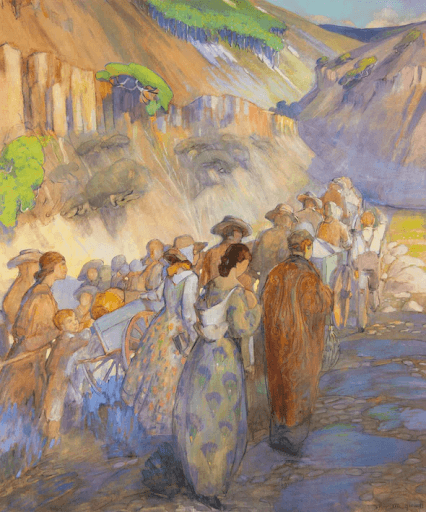
Zion Ho!
Oil on canvas, 1935
As with Handcart Pioneers, Minerva Teichert portrays the journey of Mormon pioneers to the Salt Lake Valley in 1847 in her painting Zion Ho!. She illuminates the strength of these individuals as they enter a canyon, depicting their backs, rather than faces, seemingly inviting us to join them as they push handcarts through rocky terrain, reminding us, as J. Reuben Clark prompts to “preserve what they wrought.” A well-known hymn in the LDS faith, Teichert suggests they sing Put Your Shoulder to the Wheel to liven spirits and encourage them on their difficult, yet significant journey. As students at BYU Law engage in rigorous study, this painting acts as a beacon of strength as students strive to fulfill BYU Law’s mission.